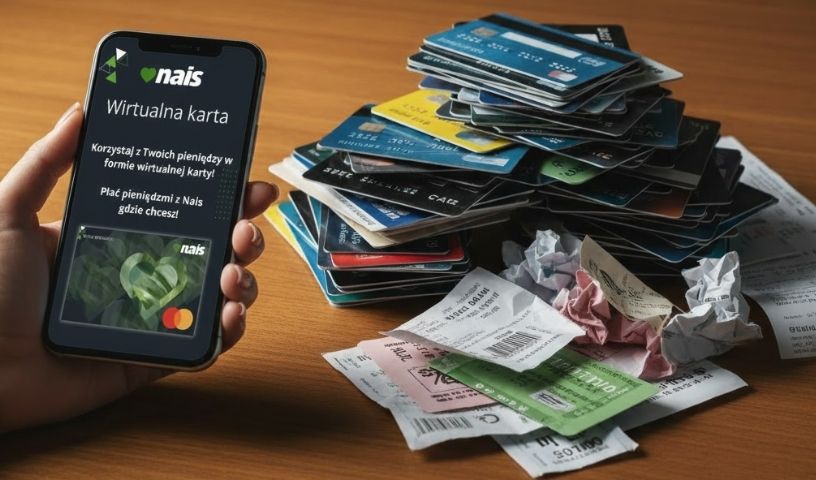
Vouchers, prepaid cards and employee income - tax compendium 2026
The scenario in many organizations looks strikingly similar and often ends in a painful collision with the tax office. The holidays or jubilee are approaching, the management releases the budget for awards, and the HR department in good faith orders paper vouchers to a large retail chain, covering this cost from the funds of the Company's Social Benefits Fund (ZFŚS). The mood in the team increases until a check from the tax office appears in the staff. Suddenly it comes to light that the employer misclassified the benefit and did not collect the due advance on income tax (PIT), and confused employees are left with a measurable underpayment in the annual return.
Most companies burn through social budgets or face penalties for one simple reason: they confuse concepts. They treat commodity vouchers and prepaid cards as synonyms. For the tax collector, however, they are two completely different entities, with drastically different financial consequences.
If you are in charge of HR, payroll or finance, this guide will dispel your doubts. We will break down into factors the first regulations in force in 2026, the jurisprudence of the Director of National Tax Information (KIS) and the optimal methods of distribution of benefits.
Why are vouchers and prepaid cards not the same thing under the law?
A prepaid card is, from a tax perspective, a cash benefit (equated to cash), while a merchandise voucher or gift card to a specific store is a badge of legitimacy, which dramatically changes the way they are taxed and the right to benefits.
Definition and legal status
In accordance with Article 21 (1) (67) of the Personal Income Tax Act (PIT), benefits in kind and in cash financed by the ZFŚS are subject to exemption from taxation up to a certain limit. However, the legislator explicitly excluded from this group “vouchers, vouchers and other marks authorizing their exchange for goods or services”.
The Treasury takes a very restrictive approach to this definition. A supermarket voucher, a spa voucher or even a plastic gift card operating exclusively in one clothing chain (the so-called closed system) - these are all identification marks. In turn prepaid card (prepaid), equipped with a BIN number, the logo of the issuer (e.g. Mastercard, Visa) and allowing withdrawal from an ATM or payment at any terminal, is considered by banking law as a payment instrument. It's just money in a different form.
Market context 2026
According to the latest market analysis from the beginning of 2026, more than 85% of employees prefer to receive flexible financing rather than vouchers tied to a single brand. Payers who understand this benefit doubly: they give employees what they want and use legal tax gateways. KIS in numerous interpretations (for example, the loud interpretation 0113-KDIPT2-3.4011.741.2025.1.GG from the end of 2025) has repeatedly confirmed: funding a prepaid payment card is a cash benefit.
Scenario from life
The production company near Poznań employs 300 people. In December 2025, the management gave out vouchers to the network of hypermarkets worth PLN 800 (financed by the ZFŚS) to everyone. The accounting considered that the amount was within the limit, so the PIT was not discharged. Error. Vouchers are not exempt from Article 21 (1) (67). The company had to submit corrections to the PIT-11 declaration for 300 employees and pay interest on tax arrears. If prepaid cards were issued instead of vouchers, no tax liability would arise at all.
tip
Before you sign a contract with a benefit provider, ask them one question: “Is your product a payment instrument within the meaning of Banking Law or a closed commodity voucher?”. Always request a copy of the individual tax interpretation confirming the status of the product as a monetary benefit.
Tools
Use the EUREKA Customs and Tax Information System to verify your tax position. Enter the phrase “zfśs prepaid card” to keep track of the latest judgments.
Company Social Benefits Fund (ZFŚS) and exemption limits in 2026
The limit of exemption from PIT tax for benefits (in kind and in cash) financed by the ZFŚS in 2026 is PLN 1000 per year per employee.
Tax Definition and Mathematics
If the employer correctly classifies the benefit (e.g. chooses a prepaid card) and finances it 100% from the ZFŚS sub-account, the tax shield is included. The employee does not pay a penny of tax up to PLN 1000 per calendar year. Anything that crosses this barrier - for example, the 1001st zloty - becomes normal income from the employment relationship, from which the advance must be deducted.
Market context
Even in 2020-2023, due to special covid laws, this limit was artificially inflated to PLN 2000. As of January 1, 2024, we have returned to the old, lower rate, and this status continues into 2026. I continue to meet companies whose HR systems have not been updated, which generates a huge treasury risk.
Scenario from life
Anna is a logistics specialist. In March, she received a grant from ZFŚS for “holidays under a pear” in the amount of PLN 600. In December, the company funded her prepaid card with PLN 700 on the occasion of Christmas. The total amount of benefits from ZFŚS is PLN 1300.
What does the employer have to do?
Nothing will be deducted from the first 1000 PLN. From the surplus, i.e. PLN 300, he must calculate and collect an advance on PIT in December according to Anna's tax scale (usually 12%).
tip
The limit of 1000 PLN is assigned to the employee, not the employer. However, the legislator does not require you to play detective. You do not need to ask the employee if he got any kind of allowance from the ZFŚS in another company where he works part-time. You only account for what comes out of your budget.
Tools
Configure the ERP/HR and payroll system to have a separate salary component: “ZFŚS cash benefit exempted from PIT up to PLN 1000”. The system should keep an eye on the growing balance itself and automatically tax the surplus.
Compilation: Vouchers vs Prepaid Cards (ZFŚS Financing)
The social criterion trap - when does the Social Insurance Institution knock on the door?
Benefits from the ZFŚS are completely exempt from ZUS contributions (without an amount limit), provided that their granting and amount depends on the living, family and material situation of the employee (the so-called social criterion).
Definition and procedure
Exemption from PIT is one thing, but the real savings are generated by the lack of “ossification”. The provision of § 2 (1) (19) of the Regulation on the detailed rules for determining the basis of assessment of contributions to pension and annuity insurance is brutally honest: you do not pay the ZUS from funds from the ZFŚS. However, there is a catch. The ZFŚS Act imposes an obligation to differentiate benefits. You can't give every employee $500.
Market context
About 40% of ZUS decisions challenging the regulations of the ZFŚS result from the principle of “equivalence”. Inspectors in 2026 have advanced analytical tools at their disposal. If they see in the JPK files that 100 employees received the same amount of credit on the card - they immediately consider it a hidden bonus and order the payment of outstanding ZUS contributions along with interest.
Scenario from life
The IT company creates three income thresholds in the regulations of the ZFŚS, based on the income statements per family member:
- Threshold A (lowest income): credit a prepaid card for PLN 800.
- Threshold B (average income): credit card for PLN 600.
- Threshold C (highest income - mainly management and senior developers): supply at PLN 400.
Thanks to such stratification, the ZUS check ends after 15 minutes with a positive result. The social criterion has been met.
tip
Encourage employees to update their income statements at least once a year, before distributing winter benefits. If the employee refuses to report income, include in the regulations a record that he automatically lands at the highest income threshold (lowest benefit).
Current assets of the company - how to settle benefits outside the ZFŚS?
Benefits financed from the company's current working capital are fully subject to PIT taxation and social security contributions, regardless of whether they are vouchers or prepaid cards.
Definition of accounting entry
Not every company has to and wants to run a ZFŚS (this obligation applies mainly to employers with at least 50 full-time employees, although there are exceptions). If you give an employee a prepaid card for the holidays financed directly from the current account of the company, then the benefit loses any protective social character.
Scenario from life
Software house from Gdynia employs 30 programmers. They do not have ZFŚS. The CEO decides to reward the team for delivering a difficult project and gives away physical prepaid cards topped up with the amount of PLN 1000. From an accounting point of view, the employee received exactly PLN 1000 gross for the basic salary. The company must deduct tax (12% or 32%), health contribution (9%) and social security (approx. 13.71%) from his net salary. As a result, the payment to the employee's account will be smaller to cover taxes from the benefit.
tip
When funding cards from working capital, let the team know (preferably using a gross reward mechanism). The employee needs to know that the plastic in his wallet will deplete his next payout for tax deductions. Otherwise expect a queue of frustrated people in the HR department.
Virtual prepaid cards - tax optimization in practice
We are in 2026. Handing out physical plastic is a logistical nightmare, especially in an age of hybrid work and distributed teams. Couriers lose packages, cards have to be manually activated, and the expiration date of plastic can escape.
That is why more and more conscious companies are switching to a tailor-made solution for our times, implementing virtual prepaid cards for employees. From the point of view of tax law, this is pure money (they meet the requirements of Article 21 (1) point 67 of the PIT, which I wrote about above), and from the perspective of UX - an incredible saving of time.
How does it work in the modern HR ecosystem?
- Instant distribution: HR clicks one button in the cafeteria platform.
- Immediate access: The employee logs into the app, sees the virtual card and adds it to Apple Pay or Google Wallet with a single tap.
- Payment: He can immediately pay for coffee, order equipment on Allegro or pay for Netflix.
- Safety: Losing a physical wallet does not mean losing funds. The virtual card is protected by the biometrics of the phone.
Table: Traditional Vouchers vs Virtual Cards
Instead of wasting time negotiating with five different voucher providers (because one department prefers sports and the other electronics), the virtual prepaid card gives full democracy. You have a calm head and confidence before the tax office, and the employee has freedom of choice.
The 5 most common mistakes when granting benefits
What to avoid when working with a social budget and benefits?
- Mistake 1: Equal distribution of funds from the ZFŚS. Ignoring the social criterion is the fastest way to get a mandate from ZUS. If in the paylist you see a column “500 PLN each” - run away. This is a hidden rule bonus.
- Mistake 2: Classifying individual store cards as prepaid cards. Just because something is shaped like a credit card and a chip doesn't make it a payment instrument. The gift card “Only to Drugstore X” is a voucher. You will pay PIT from him.
- Mistake 3: Lack of accrual records. Failure to comply with the limit of 1000 PLN per year is a school mistake. Especially when the company gives benefits at Easter, then on the occasion of “Worker's Day”, and finally improves Christmas. Add it all up!
- Mistake 4: Forgetting former employees and retirees. The Law on ZFŚS requires that pensioners - former employees of the establishment - be covered by social care. For them, the limit of exemption from PIT for benefits in kind is not 1000 PLN, but up to 4500 zł per year (pursuant to Article 21 (1) (38) of the U.P.D.O.F.).
- Mistake 5: Bad description of cost invoices. The accountant sees the invoice “Christmas vouchers”, while the company ordered the replenishment of prepaid payment cards. Use the correct nomenclature on invoices, so as not to provoke unnecessary questions during a possible inspection.
FAQ - Frequently Asked Questions
Is the Allegro/Empik gift card a voucher or a prepaid card?
From the point of view of the tax authorities, these are identification marks (vouchers). They give the right to exchange for goods at a strictly defined exporter/in a specific network. Therefore, financing them from the ZFŚS does not exempt them from PIT. They are subject to tax on the first zloty.
When exactly do I need to take a tax advance on a prepaid card?
The advance payment must be deducted in the month in which the value of all benefits paid in a given year from the ZFŚS exceeds the amount of PLN 1000. Revenue is generated when funds are placed at the employee's disposal (i.e., on the day of crediting the card account).
What if an employee terminates the contract in the middle of the year?
If, up to the moment of termination of the contract, the employee received prepaid cards in the amount of, for example, PLN 800, this amount benefits from exemption from PIT. The employer indicates this in the internal documentation, but does not add to the income on PIT-11, unless the limit is exceeded.
Can I issue a virtual prepaid card to a person on a B2B contract?
Yes, but this is considered an additional income from the business. Persons on B2B contracts are not subject to the ZFŚS Act, so they are not entitled to any relief from this (neither the free amount of PLN 1000, nor exemption from ZUS). The counterparty must add the value of the card to his income and tax it on his own.
Is the cost of handling prepaid cards charged to ZFŚS?
No. The very cost of issuing cards (e.g. plastic production, operator commission, IT platform cost) are administrative costs that the employer must cover from the company's working capital, and not from the Fund. Only the nominal value of the top-up is deducted from the ZFŚS sub-account, which goes directly to the employee.
summary
- The law clearly separates concepts. Commodity vouchers (identification marks) do not benefit from the exemption from PIT, regardless of the source of financing. Prepaid cards (payment instruments) are treated like cash.
- ZFŚS 2026 limit. The amount exempt from PIT tax for benefits from the Social Fund is equal to PLN 1000 per employee per calendar year.
- ZUS under the microscope. The funds from the ZFŚS bypass ZUS contributions regardless of the limit, as long as you absolutely apply the social criterion (differentiation of amounts based on income/living situation).
- Working capital is 100% of the costs. Financing cards from the company's regular account means full taxation of the PIT and the payment of ZUS.
- Digitalization wins. Virtual cards distributed by cafeteria platforms are not only tax compliance, but above all cutting unnecessary logistics processes in HR.
If you are faced with the choice of a form of benefit, put aside the sentiment towards traditional vouchers. Complicated tax law today rewards those who are moving towards open payment instruments.
(Disclaimer: The text is informative and educational. In the case of complex factual situations, it is recommended to consult a licensed tax advisor).